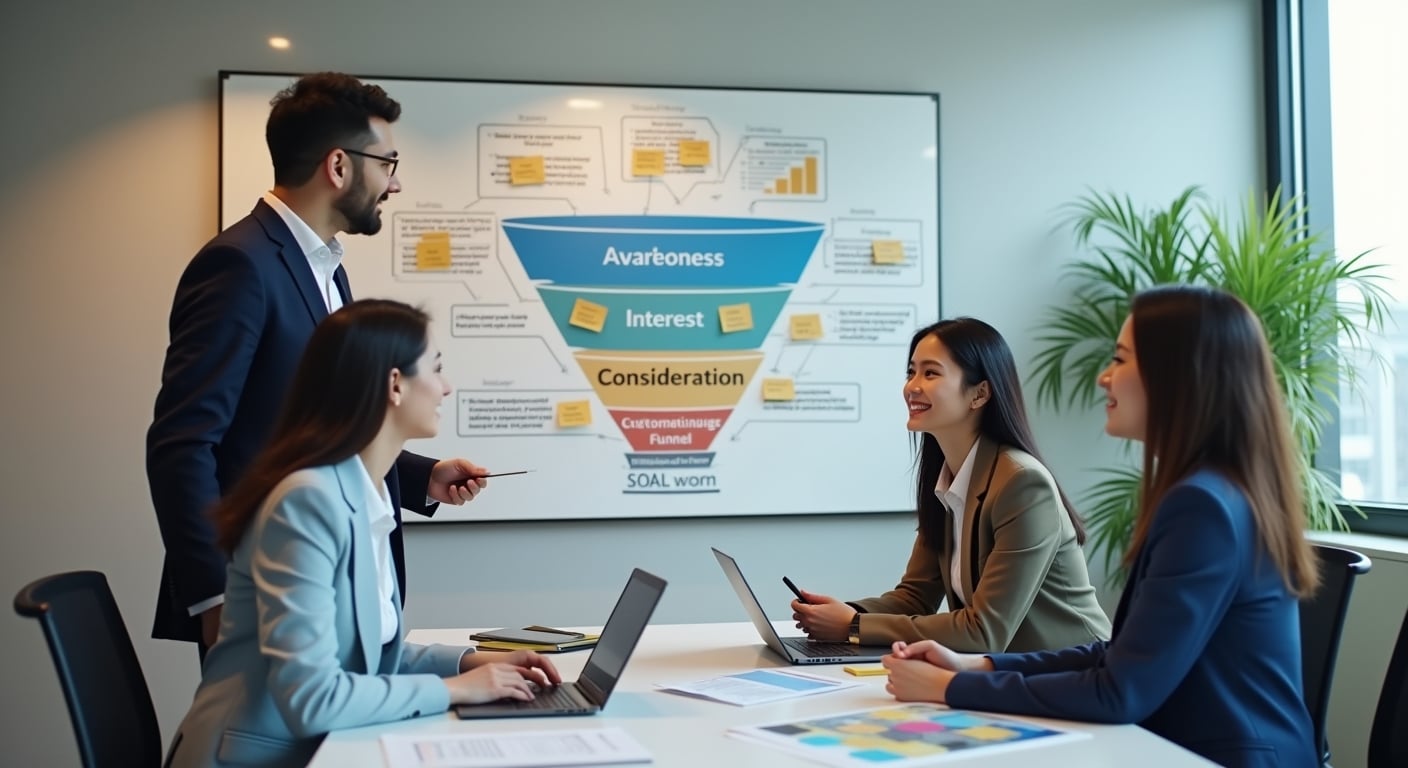
Many SMEs invest in ads, social media, and promotions but still struggle to turn attention into consistent sales. The problem is often not effort. It is the lack of a clear system that guides prospects from first discovery to purchase and repeat business. If you want to build a marketing funnel for SMEs, you need a structured approach that matches how real buyers think, compare, and decide.
A strong marketing funnel helps small businesses attract the right audience, capture leads, nurture interest, and convert prospects without relying only on one-off campaigns. For Malaysian SMEs, this matters even more because budgets are tighter, competition is increasing, and buyers often move across Google search, social media, WhatsApp, and offline touchpoints before buying.
In this guide, you will learn how to build a marketing funnel for SMEs step by step, from identifying your ideal customer to choosing channels, creating offers, capturing leads, automating follow-ups, and measuring results. Whether you run a B2B service company, retail business, education brand, or local professional service, the framework below can help you create a more predictable growth system.
What a marketing funnel means for SMEs
A marketing funnel for SMEs is the process that moves a potential customer from awareness to action. It covers the full path someone takes when they first hear about your business, show interest, evaluate options, make a purchase, and ideally return again.
For small businesses, a funnel matters because it replaces guesswork with a repeatable system. Instead of posting random content or running ads without follow-up, you create a customer journey with a purpose. Each stage has a goal, a message, and a next step.
This is especially useful for businesses that need more than one interaction to close a sale. A buyer may see your Facebook ad today, visit your website next week, ask questions via WhatsApp later, and only buy after receiving a follow-up offer. Without a funnel, these opportunities are often lost.
If your business is still planning growth activities at a broad level, it helps to start with a clear marketing strategy for SMEs so your funnel supports your overall business goals.
The main stages of a marketing funnel
Awareness
This is where prospects first discover your business. They may find you through Google search, Facebook, Instagram, TikTok, referrals, online directories, or paid ads. At this stage, they are not ready to buy yet. They are simply becoming aware that your business exists and may solve a need.
Interest
Once people notice your business, the next step is to build enough interest for them to engage. This may happen through educational content, product benefits, social proof, or a useful lead magnet. The goal is to encourage clicks, page visits, video views, inquiries, or form submissions.
Consideration
At this point, prospects are actively comparing options. They want proof, pricing clarity, testimonials, case studies, FAQs, and a reason to trust your brand. They may also want a consultation, demo, free trial, or more product details.
Conversion
This is where the prospect takes the desired action. Depending on your business, that could be making a purchase, booking an appointment, signing a contract, or replying to a WhatsApp sales message.
Retention
The funnel should not stop after the first sale. A customer who buys once can become a repeat buyer, referrer, or high-value client. Retention efforts include onboarding, customer service, renewal reminders, loyalty offers, upsells, and post-purchase follow-ups.
How Malaysian SMEs can identify their ideal customer before building a funnel
Before you build any SME lead generation funnel, you need to know exactly who you want to attract. A common mistake is trying to target everyone. That usually leads to weak messaging, poor-quality leads, and low conversions.
Start with a simple customer profile. Look at your best current customers and identify patterns such as:
- Industry or business type
- Location in Malaysia
- Company size or household profile
- Common pain points
- Budget range
- Decision-making factors
- Main objections before purchase
For example, a Selangor-based accounting firm targeting SMEs may focus on business owners who are overwhelmed by tax deadlines and want reliable compliance support. A skincare retailer may target women aged 25 to 40 in urban areas who are searching for sensitive-skin solutions and trust reviews before purchasing.
The better you understand your ideal customer, the easier it becomes to create the right content, offer, and call to action at each stage of the funnel.
How to map the SME customer journey from first click to sale
To build a marketing funnel for SMEs effectively, you should map the actual customer journey rather than assume how people buy. Think through every major step from first touchpoint to final sale.
A simple journey may look like this:
- A prospect searches on Google for a solution
- They click a blog article or service page
- They download a checklist or request pricing
- They receive follow-up emails or retargeting ads
- They contact your business by form, phone, or WhatsApp
- They receive a consultation or sales proposal
- They decide to buy
Documenting this flow helps you spot gaps. For instance, you may have strong awareness from social media but no lead capture process. Or you may generate inquiries but fail to follow up consistently. If you want to visualise each touchpoint in more detail, a guide on customer journey mapping can help you align messaging with buyer intent.
Choosing the right marketing channels for each funnel stage
Not every channel works equally well at every stage. A sales funnel for small business performs better when each channel has a specific role.
Top of funnel channels
For awareness, useful channels include SEO, Google Ads, social media content, short videos, PR, marketplace visibility, and referrals. These channels help prospects discover your business.
For Malaysian SMEs, local SEO and Google Business Profile can be especially valuable if customers search by service and city, such as “lawyer in Johor Bahru” or “coworking space KL”. Businesses also benefit from a broader digital marketing for Malaysian SMEs approach that combines search, content, and paid channels.
Middle of funnel channels
In the interest and consideration stage, educational blog content, webinars, comparison pages, case studies, downloadable guides, and lead magnets work well. Email sequences and retargeting ads also help keep your brand in front of prospects who are not ready to buy immediately.
Bottom of funnel channels
At conversion stage, you need channels that support direct response. This may include landing pages, WhatsApp click-to-chat ads, demos, consultations, limited-time offers, and sales calls.
The key is matching channel to buyer intent. Someone who has never heard of your brand likely needs education first. Someone who has already visited your pricing page may need a stronger sales offer or personal follow-up.
How to create offers and content that move prospects through the funnel
Content should not only attract traffic. It should move people to the next step. That means you need a content plan tied to funnel stages.
Awareness content
Create content that answers common questions, addresses pain points, or explains industry problems. Examples include blog posts, videos, social posts, and beginner guides.
Consideration content
Here, prospects want evidence and clarity. Useful content includes product comparisons, service breakdowns, testimonials, pricing explainers, ROI examples, and case studies.
Conversion offers
At the decision stage, give people a clear reason to act. Examples include a free consultation, audit, trial, quote, discount, bonus, or limited-time package.
For example, a Malaysian HR software provider could attract awareness with content on payroll compliance, capture leads with a free payroll checklist, nurture interest with case studies from local SMEs, and convert with a live demo plus onboarding support.
If lead acquisition is a major goal, it is worth studying proven lead generation strategies and adapting them to your audience and industry.
Lead capture tactics: landing pages, forms, WhatsApp and CTAs
A funnel cannot work if interested visitors have no clear way to respond. Lead capture is where many SMEs lose potential customers.
Your landing pages should focus on one goal only. Do not overload them with too many menu options or competing calls to action. A strong landing page usually includes:
- A clear headline focused on the customer benefit
- Short supporting copy
- Trust signals such as reviews or client logos
- A simple form or WhatsApp button
- A strong call to action
Forms should ask only for essential information. If your offer is a guide or quote request, name, phone number, and email may be enough. For many Malaysian businesses, WhatsApp is one of the most effective lead capture tools because it feels direct and familiar to buyers.
CTAs should also match intent. Someone reading an educational blog may respond better to “Download the checklist” than “Buy now”. Someone on a service page may be ready for “Get a free quote” or “Chat on WhatsApp”.
How to nurture leads using email, retargeting and follow-ups
Most leads will not convert after one interaction. That is why nurturing is essential in any marketing funnel Malaysia businesses want to scale.
Email is one of the most cost-effective ways to nurture leads. A simple sequence can welcome the lead, explain your solution, share proof, answer objections, and invite them to take the next step. Retargeting ads can support this by bringing back visitors who viewed your site but did not convert.
Follow-ups also matter. If someone downloads a guide or requests pricing, your business should respond promptly. Delayed follow-up often means lost sales.
A practical nurture sequence may include:
- Immediate confirmation email or WhatsApp reply
- Educational content related to the lead’s problem
- Case study or testimonial
- Offer to book a call or request a quote
- Reminder follow-up if there is no response
For SMEs looking to streamline this process, email marketing automation can save time while improving consistency and lead quality.
Using CRM and automation tools to manage your funnel efficiently
As leads increase, spreadsheets quickly become difficult to manage. A CRM helps you track where each lead is in the funnel, record conversations, assign follow-ups, and reduce missed opportunities.
A good CRM for SMEs should allow you to:
- Store lead and customer data
- Track inquiry sources
- Move leads through funnel stages
- Set reminders for follow-ups
- Automate parts of lead nurturing
- Measure conversion performance
For example, if a prospect comes in from Facebook Ads, downloads a guide, and later books a consultation, your CRM should show the full journey. That makes it easier to understand which channels and campaigns are generating actual results, not just clicks.
If your team also handles opportunities manually, structured CRM for small business systems can support both marketing and sales coordination.
Key marketing funnel metrics SMEs should track
You cannot improve what you do not measure. To judge whether your marketing funnel for SMEs is working, track a few core metrics at each stage.
- Traffic volume by source
- Landing page conversion rate
- Cost per lead
- Lead-to-customer conversion rate
- Email open and click rates
- Response time to inquiries
- Customer acquisition cost
- Average order value
- Repeat purchase rate
For instance, if your ad campaign drives many clicks but very few leads, the issue may be your landing page. If you get many leads but few sales, your offer, sales process, or follow-up may need work.
Focus on the weakest stage first. Small improvements in one part of the funnel can create meaningful gains in revenue.
Common marketing funnel mistakes SMEs should avoid
Many SMEs do not fail because funnels are too complex. They fail because basic funnel principles are ignored.
- Targeting too broad an audience
- Using the same message for every stage
- Sending paid traffic to weak pages
- Not offering a clear next step
- Following up too slowly
- Not tracking lead sources and conversions
- Ignoring retention and repeat sales
Another common mistake is expecting immediate sales from cold traffic. Prospects often need several touchpoints before trusting a smaller brand, especially in higher-value purchases.
A simple step-by-step example of a marketing funnel for an SME
Imagine a KL-based office renovation company targeting growing SMEs.
- Awareness: The company publishes SEO content on office renovation costs and workspace design ideas, and runs Facebook ads showing before-and-after projects.
- Interest: Visitors are invited to download a free office renovation budget checklist.
- Lead capture: The checklist is offered through a landing page with a short form and WhatsApp option.
- Nurture: Leads receive an email series with project examples, client testimonials, and renovation timelines.
- Consideration: Interested leads are invited to book a free consultation.
- Conversion: The sales team provides a proposal and follows up within 48 hours.
- Retention: Past clients receive maintenance support tips and referral incentives.
This type of customer journey for SMEs is simple, practical, and scalable. The same model can be adapted for education centres, agencies, clinics, retailers, software providers, and local service businesses.
How to improve and optimise your funnel over time
Your first funnel does not need to be perfect. What matters is launching a workable version, collecting data, and improving performance over time.
Review your funnel monthly and ask:
- Which channels bring the best leads?
- Where are prospects dropping off?
- Which offers convert best?
- Are follow-ups happening quickly enough?
- Which pages need stronger messaging or trust signals?
Test one change at a time. You might improve a landing page headline, shorten a form, add testimonials, change a CTA, or refine your email sequence. Over time, these small improvements can significantly increase lead quality and sales efficiency.
Build a funnel that supports steady SME growth
To build a marketing funnel for SMEs successfully, you do not need an overly complicated system. You need a clear customer path, the right channels at the right stages, strong offers, consistent follow-up, and simple measurement. A good funnel helps you generate leads more predictably, convert opportunities more consistently, and grow with less wasted marketing spend.
For Malaysian SMEs, the best funnel is one that matches local buyer behaviour, works within your team capacity, and improves over time through real data.
Need help turning traffic into leads and sales?
If your business is attracting attention but not enough conversions, now is the right time to review your funnel. Start by mapping your customer journey, tightening your lead capture process, and improving follow-up speed. A better funnel can make your existing marketing work much harder.
Explore related guides:
Frequently asked questions about marketing funnels for SMEs
What is a marketing funnel for SMEs?
A marketing funnel for SMEs is a structured process that guides potential customers from first awareness of your business to lead generation, conversion, and repeat purchase. It helps small businesses turn marketing activities into a more predictable sales system.
How do I create a simple marketing funnel for a small business?
Start by identifying your ideal customer, then map the journey from discovery to purchase. Choose a few channels for awareness, create a lead capture offer such as a quote or guide, nurture prospects through email or WhatsApp follow-ups, and track conversion results so you can improve the funnel over time.
Can a small business build a marketing funnel on a limited budget?
Yes. Many SMEs begin with low-cost tools such as a website, landing page builder, WhatsApp, email software, and a basic CRM. Organic SEO, helpful content, and consistent follow-up can be highly effective even without a large ad budget.